Thank You for Visiting

Unity Baptist meets for worship on Sunday mornings at 11 a.m. We worship through music, prayer, giving, preaching and the response to preaching. You are welcome to join us. See our about page for more, read our history, listen to sermons going back to 2015. 


What would you like to do?

Learn About  who we are and what we believe.
Read about our church’s History. 
Bulletin is now Announcements.
Listen to Sermons.
Get directions to Find Us.

Click here to read the previous Pastor’s Welcome letter. 

Posted in announcement | Tagged , , , | Leave a comment

Celebrate the Resurrection!

Jesus was dead. Jesus was resurrected; not just brought back to life but new life in a glorified body. Death, hell and the grave have been defeated. What else is there to be afraid of?

Posted in sermon | Tagged , , , , | Leave a comment

Holy Saturday

Holy Saturday, also known as Black Saturday, is the full day Jesus spent in the grave. No lessons, no sermons, no miracles. His followers were scattered to the wind and each may have been unaware of what was happening with the others at any given moment. Did the other 11 disciples know that Judas went out and hung himself? Did anyone know what Peter was going through? Mary had been visited by angels, shepherds and wise men when Jesus was born; how was she processing the death of her son on this day?

As I wrote at the end of the crucifixion post, now we wait. Part of the Christian experience is pressing on when there seems to be no hope. Rest assured in this: no situation, no trial, no moment of doubt, will ever be as hopeless for us as it seemed to be for the followers of Jesus on this day.

Posted in teaching | Tagged , , , | Leave a comment

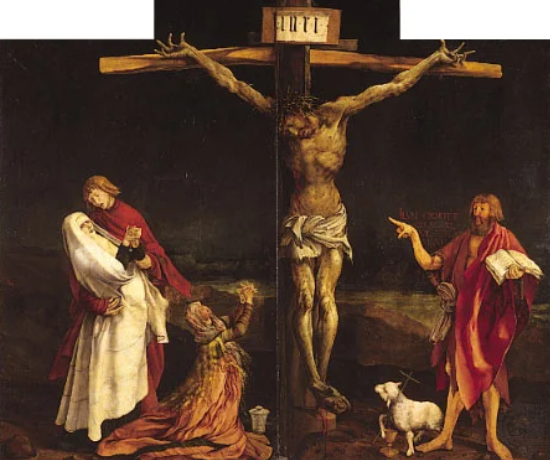
The Crucifixion

Some people carry a small silver cross in their pocket to remind them of Jesus throughout the day, or wear a gold cross on a chain or necklace. Some images of the cross are absolutely gorgeous, perhaps covered with flowers and butterflies. But the truth is, the cross was an ugly thing. It represented the cruelest form of torture and execution imaginable at the time. We find glory in the cross because of who Jesus is and what he did for us, but to anyone there to witness the crucifixion, the event was tragic and the imagery horrifying.

Isaiah 53 presents a vivid picture with many accurate details of the crucifixion, written 800 years before the event. Isaiah lived in a period of time before the Roman Empire or even that of Alexander the Great. He had never seen a crucifixion. Read his words and think about that for a moment. The prophet wrote as he was inspired by the Holy Spirit. Matthew 27, Mark 15, Luke 23 and John 19 all record the death and burial of Jesus on what we call Good Friday.

Jesus offered no defense at his mock trial. Judas went out and hung himself, after trying to return the 30 pieces of silver. Peter denied Jesus three times, and then went out himself and wept bitterly. The large crowds that had been cheering on Palm Sunday were nowhere to be found. Even most of his loyal followers ran away, fearing they would be arrested as well. Only John and a few women, including his mother Mary, were at the cross when Jesus died. There were also scoffers and Jewish leaders there to witness the execution, no doubt pleased that their “Jesus problem” was over.

Jesus was taken off the cross and placed in the tomb of Joseph of Arimathea. In John’s Gospel, Nicodemus appears three different times. The last time we see him is after the crucifixion; he is there to help bury Jesus. I don’t believe we can preach anyone into heaven, but consider how few people were willing to still be associated with Jesus after his arrest, trial and execution.

Jesus died and was buried. Then the sun went down and the Sabbath began. It was a dark day with a tragic ending for anyone that believed Jesus was the fulfillment of prophecy and the hope of Israel. And now we wait.

Posted in teaching | Tagged , , , , , , , , , | Leave a comment

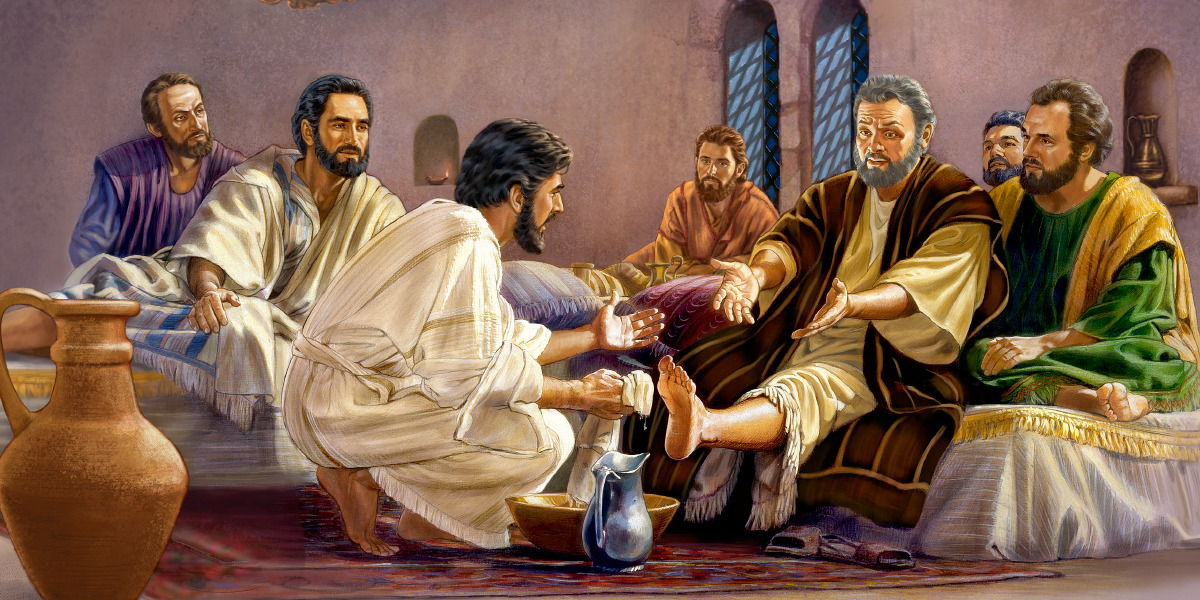
Jesus Washed Feet

What would you do if you knew, for a fact, that you only had one day left on this earth. Jesus knew, and he washed feet.

In my post on the Last Supper, I referenced that event in the synoptic Gospels of Matthew, Mark and Luke. John writes a very different type of Gospel account, one that is not narrative in nature. He may take for granted that his readers have read one or more of the other Gospels so he is sharing additional information and not repeating details that others have already recorded. He assumes from Chapter 1 that the reader knows certain things about the life and ministry of Jesus and jumps straight into explaining that he is God. The Gospel of John represents what we call high Christology, a very high view of Christ as eternal and divine.

The events of John 13 take place on the night of the last supper. Only John records an event that took place after the meal was finished. Jesus got up, took off his outer garments, tied a towel around his waist, then with a basin of water began washing the disciples’ feet. Every middle and upper class home in Israel would have had a servant at the door to wash the feet of guests as they entered. (Lower class homes would probably have had a station set up for you to wash your own feet as you entered.) The servant waiting to attend guests might have been of any ethnicity but never Jewish. Feet were unclean, literally and ritually, and touching another’s feet would have made you ceremonially unclean. Jesus came to serve and not to be served. He was the good teacher, the Apostles’ rabbi, and they recognized it was in appropriate for Jesus to be in the floor and doing this for them. But after redressing and returning to his place at the table, he asked them if they understood what he had. He instructed them they must be willing to do the same for one another. Later in v. 34 he says “A new commandment I give to you, that you love one another: just as I have loved you, you also are to love one another.”

That sets the bar pretty high. Love like Jesus. Paul writes in Ephesians that wives are to submit themselves to their husbands, but he also instructions husbands to love their wives as Christ loved the church and gave himself for her. The goal for every Christian believer is to become like Christ. There is no halfway, small commitment, good enough for the girls we go with version of Christianity. At least not one that pleases God. It takes a full commitment, everything we have, to do it right. So much so that we cannot do it on our own and rely on the working of the Holy Spirit who dwells in us to make it possible. When some hear “Christian church” they think about a man in a suit standing in front of a crowd speaking. That is only once or twice a week for an hour or so. Most of the Christian life is lived in the trenches Monday through Saturday. Jesus demonstrated his willingness to “get down and dirty” and told his followers to do the same.

Posted in teaching | Tagged , , , , , | Leave a comment

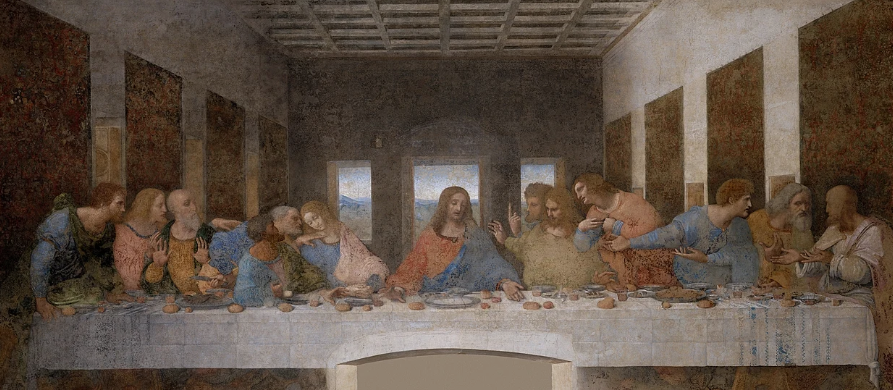
The Last Supper

I preached on Sunday that “the last supper’ sounds like an ending but for the followers of Jesus it was also a new beginning. At the last Passover meal Jesus would share with his disciples, he instituted what we know as The Lord’s Supper or Communion (or the Eucharist for our Catholic brothers and sisters). My sermon was from Matthew 26; see also Mark 14 and Luke 22.

The Last Supper by Leonardo da Vinci is highly recognizable but please do not mistake the imagery for historical accuracy. (I originally wrote way too much about the Renaissance and have moved that paragraph into the comment section for those interested. Let’s talk about Jesus right now).

The Passover was always about Jesus, from the very first one that took place on the night the night the Hebrews left Egypt. A lamb without spot or blemish would be slaughtered, and the blood displayed on the door posts, so that God’s judgement could pass over the homes of those the loved and served the LORD. Jesus is the Lamb of God who takes away the sin of the world. He was lifted up – on the cross – and those of us today with his blood displayed on our hearts will also see God’s judgement pass over. So many things in the laws and customs of Old Testament Israel point forward to who Jesus and is and what he does. Jesus is our great High Priest who continually goes into God’s presence, into the real holy place that the tabernacle and temple only represented, and offers a better sacrifice than the blood of bulls and turtle doves. His last supper with the disciples was the first communion, a ritual that connects us with fellow believers around the world and throughout the centuries. Someday we will sit down together and eat a meal with Jesus at the marriage supper of the Lamb.

Until that day comes, love God and love your neighbor. Prove the first thing by doing the second thing. Even so Lord, come quickly.

Posted in teaching | Tagged , , , , , , | 1 Comment

Holy Week: Wednesday

The Bible doesn’t really say what Jesus did on Wednesday of Holy Week. Some scholars speculate that after two eventful (read stressful) days in Jerusalem, he and the disciples spent the day resting in Bethany in preparation of Passover.

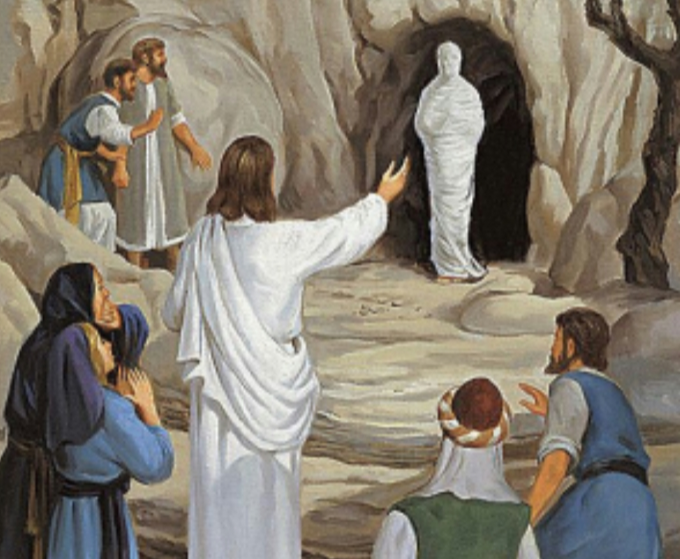
Jesus had recently proven he had the power over life and death when he raised Lazarus. Because the raising of Lazarus caused many to believe in Jesus, later plots to kill Jesus also involved killing Lazarus. His sister Mary anointed Jesus’ feet with expensive perfume. This event is often confused with an unnamed “sinful woman” recorded in Luke 7 that washed Jesus’ feet with her tears but that was neither Mary Magdalene nor Mary of Bethany.

Tomorrow we will read about the Last Supper and the symbolism of Jesus washing the disciples’ feet.

Posted in teaching | Tagged , , | Leave a comment

The Olivet Discourse

Jesus often taught large crowds using parables but spoke plainly with his disciples. Sometimes Jesus would share a parable with the crowd and then explain the meaning of it to his disciples, in a more private setting. On Tuesday of Holy Week, on the Mount of Olives, Jesus was more forthcoming with his disciples than he ever had been before.

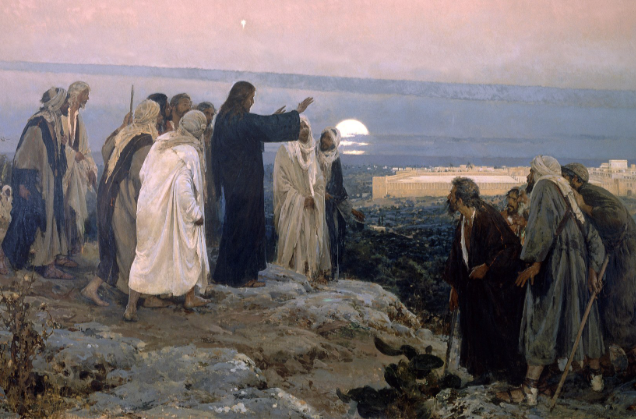
Jesus discussion with the disciples is found in the synoptic Gospels in Matthew 24-25, Mark 13 and Luke 21. There are many similarities and a few differences in the way the discourse was given but all three versions contain these elements: Jesus foretells the destruction of the Temple and/or Jerusalem, he tells of his second coming (as the Son of Man), he explains the lesson of the fig tree, and he tells them to be watchful for no one knows the day or hour. Each day the crowds would come here him teach in the temple, in Jerusalem, and each evening he would teach the disciples on the Olivet Mountain where he was staying.

There is some symbolism that is subject to interpretation. When there is disagreement, we can discuss the different schools of thought. I might even tell you which I believe is most likely. But what we will not do is argue about it. If someone is so convinced that their interpretation of the abomination of desolation is the only correct one, and they believe it is important enough to fight over. I will just concede the argument and let them have it. I consider that argument, and many others, to be purely academic. Winning the argument will not change anything on a practical level.

There are also some things I believe we can be certain of. We can be sure that Jesus will return, as he says not only here but in other places. The scripture is clear that no one, not the angels in heaven, not even Christ himself, knows when the second coming will be. Only God the Father knows. And yet people have made predictions they claimed as certainties again and again. Do not listen to those people. If they are wrong about that, they are probably wrong about other things. The Bible plainly says no one knows so their ability to read and interpret scripture should be questioned. We are also warned of false teachers.

Jesus is coming back but we don’t know when. That should have an affect on our decision making process on a daily basis. We have to be ready, there will not be time to get ready. Be sober and vigilant, watching and waiting, because his appearing could be at any moment. Love God and love others; share the Gospel with family, friends, neighbors and strangers so they can be ready too. It is the best decision you will ever make and hopefully on that point there is no debate.

Posted in Bible, teaching | Tagged , , , , , , | Leave a comment

Jesus Cleanses the Temple

If you were at church with us on Sunday morning, or have listened to Sunday’s sermon, you know that are we looking at the events of Holy Week each day leading up to Easter. Click here if you need to review, or if you are ready let’s move on.

We have four Gospels that often present similar accounts of events from the life and ministry of Jesus. Sometimes there appear to be conflicts in their story but apparent contradictions are not proof that the events did not really happen. The written accounts were recorded many years after they took place. We know that differing accounts of the same event can be found within a matter of days or even hours on social media. We are going to try to put together a basic timeline of the events of Holy Week but not all of the events are found in each Gospel and the order is not always identical. The cleansing of the temple may have been on Sunday evening or on Monday, but no one is claiming that it did not take place.

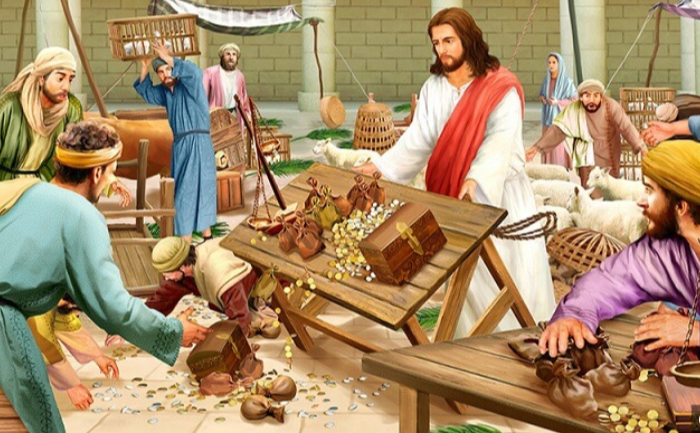
Matthew 21:12-17 records Jesus entering the Temple, apparently on Sunday evening, and driving out the money changers. The verses that follow indicate he came back the next morning and cursed a fig tree on his way into Jerusalem from Bethany, where he and the disciples were staying. Mark 11 has a slightly different timeline of the same events. Jesus looked around at everything happening in the temple on Sunday evening but then went to Bethany with his apostles. It was the next day before he entered the temple and disrupted the goings-on there. John’s Gospel does not present events in a narrative format and a careful study of that texts suggests Jesus may have ran everyone out of the temple on more than one occasion, at the beginning and then again near the end of his ministry. That would not be out of character for Jesus either.

The lesson is here is that Jesus is concerned about the temple and what takes place inside. In Matthew 21, linked above, Jesus says “It is written, ‘My house shall be called a house of prayer,’ but you make it a den of robbers.” It was the commerce, the exchange of goods for a profit, that offended Jesus. The New Testament Church is a different situation than the Temple in the first century. The church today is the people, not the building. We are the dwelling place of the Holy Spirit; we are the temple of God in the world. And he is concerned about what goes on there.

Posted in teaching | Tagged , , , , | Leave a comment

Holy Week

Holy Week, also known as Passion Week or the week of his Holy Passion, begins on Palm Sunday and runs through Easter. We celebrate the Triumphal Entry on Palm Sunday and several important events in the life and ministry of Jesus took place this week, including the institution of the Lord’s Supper and the crucifixion on Good Friday. I hope to write a few posts and discuss these events throughout this week. Meanwhile, we were in Matthew 21, 26 and 27 this morning:

The Triumphal Entry looks like winning. The Last Supper sounds like the end, and the cross looks like losing. Things are not always as they seem and the world often gets winning and losing backwards. The preaching of the cross is foolishness to those who perish, but to those of us being saved it is the power of God. (1 Cor. 1:18)

Posted in sermon | Tagged , , , , , , , , | 1 Comment

I AM

The John 8 sermon, as promised. I summarize part of it but read from verse 31 to 59. Jesus reasons with the Pharisees and other Jews in the temple, some of whom “believe” in him but have a flawed logic regarding who he is.

Posted in sermon | Tagged , , , , , | Leave a comment